
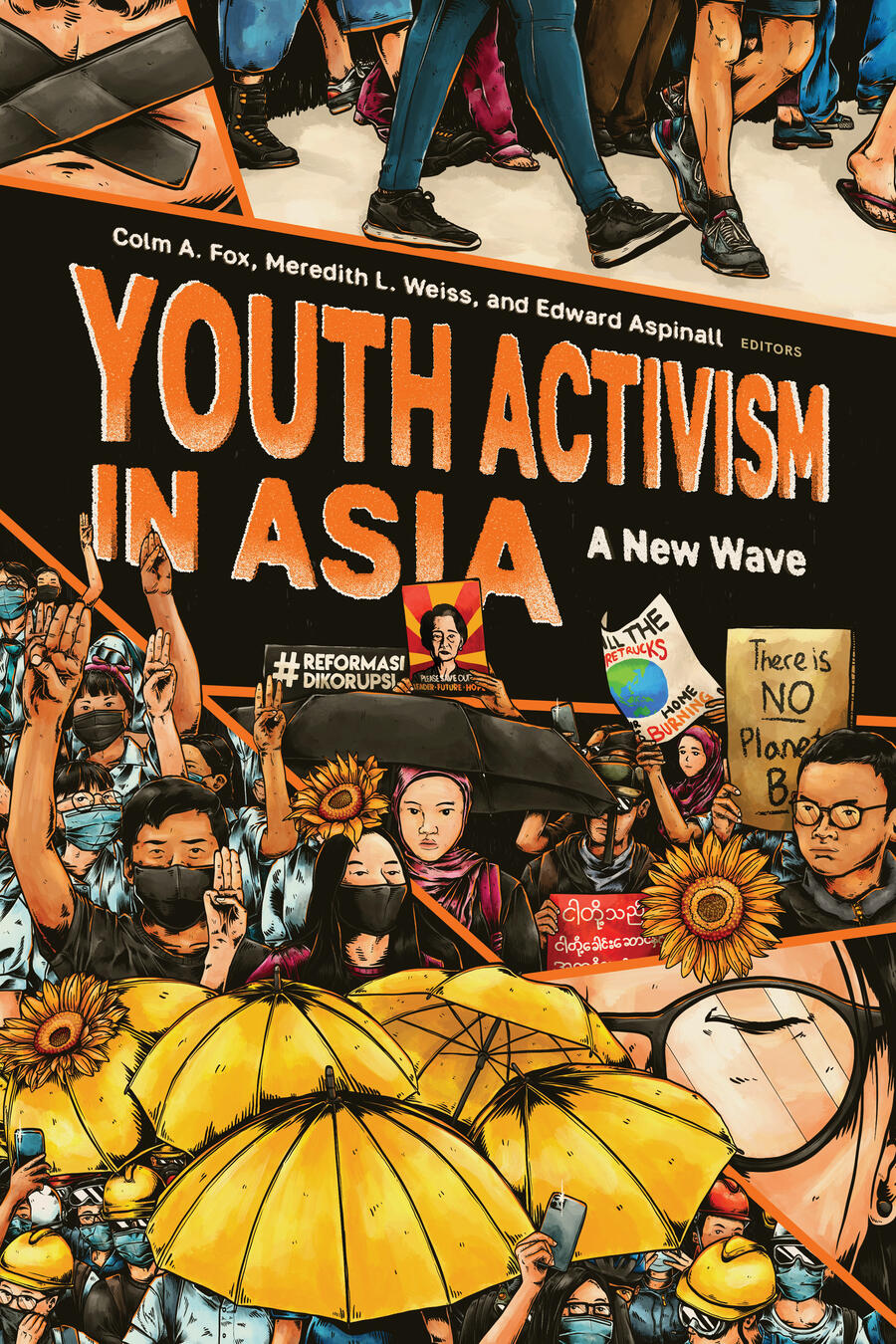
The book “Youth Activism in Asia: A New Wave,” edited by Colm Fox, Meredith Weiss, and Ed Aspinall is out now.
Prof. Juhn Chris Espia of the Division of Social Sciences contributed the Philippine chapter entitled “From the Left and Beyond: Continuities and Discontinuities in Student Activism in the Philippines,” which reassesses the character of student activism in the Philippines post-1986. Contemporary literature and political discourse in the Philippines frame student activism in the country in terms of its relationship with the Left, specifically, the Marxist or national-democratic left led by the Communist Party of the Philippines (CPP). he asks: Is this identification of student activism with the Left still justified? Drawing largely from the experience of movements and activists that are relevant at the national level— mostly Metro Manila- based and quite visible on the national political scene– he argues that student activism, especially the mass actions and organizations associated with the Left, has lost its appeal among most students and the public at large. While the leftist element endures, post- 1986 student activism has taken on a different character, shaped by the changing socioeconomic structure, changes in higher education, continuing state repression, and the availability of alternative avenues for political participation. These factors have resulted in a decline in student activism generally and in the student left specifically, in the growth of ideological diversity among student- activist groups, and in the growing importance of online activism within student activists’ protest repertoire.
From the book overview:
“Over the last decade, a youth revolt has swept through Asia. Massive, regime-rocking protests have grabbed global attention as students and other young people have confronted security forces on the streets, taking great risks to condemn authoritarian rule, promote democracy, and to push forward new agendas of personal freedom and gender equality. Behind the scenes, young people have experimented with novel and diverse modes of political and social activism, often using new tools of online communication and cultural expression, forging new kinds of coalitions, and exploring nonconfrontational and subterranean networking.
“Youth Activism in Asia focuses equally on the episodes of spectacular protest and on varieties of less visible engagement, examining the diversity, origins, and impact of contemporary youth activism in Asia. With fifteen case studies, the volume highlights shared patterns among demands, tactical repertoires, and activist networks, and examines what differentiates protest movements across countries and over time. Drawing on original fieldwork and, in many cases, their own experience, the authors address Brunei, China, Hong Kong, Indonesia, Malaysia, Myanmar, the Philippines, Singapore, Taiwan, Thailand, Timor-Leste, and transnational activism. Conceiving of “activism” broadly as any action intended to bring about social and political change, the volume makes theoretical contributions to our understanding of the relationship between protest and democratic backsliding, engagement with new communication technologies, and this generation’s distinctive intersectional politics. Youth Activism in Asia showcases the creativity, energy, boldness, and diversity of a new generation of Asian political activists.”
This publication is open access. Follow this link to obtain a copy of the book.
To cite Dr. Espia’s article: Espia, J. C. (2026). “From the Left and Beyond: Continuities and Discontinuities in Student Activism in the Philippines”, in Fox, C., Weiss, M. and Aspinall, E. (eds.), Youth Activism in Asia: A New Wave. Ann Arbor: University of Michigan Press, pp. 292-310.

